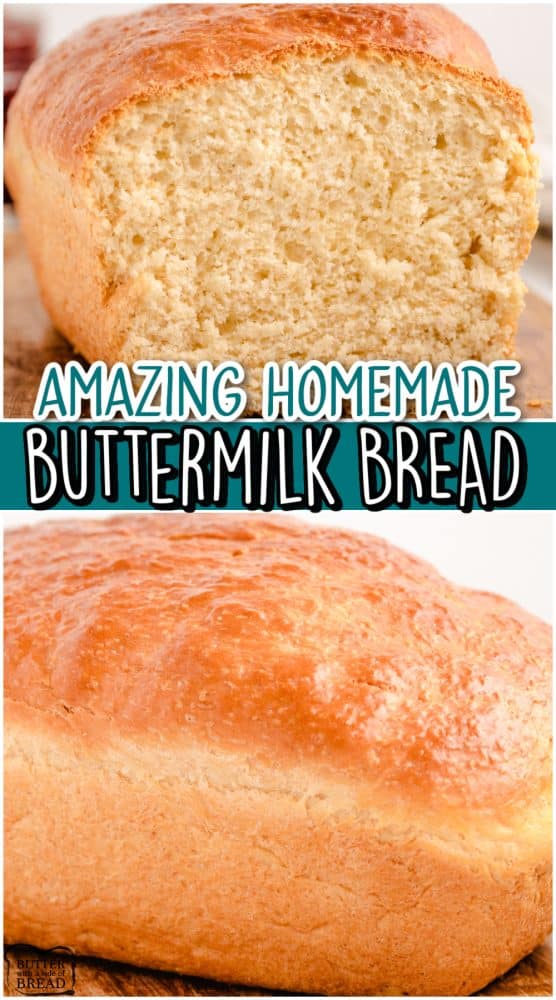
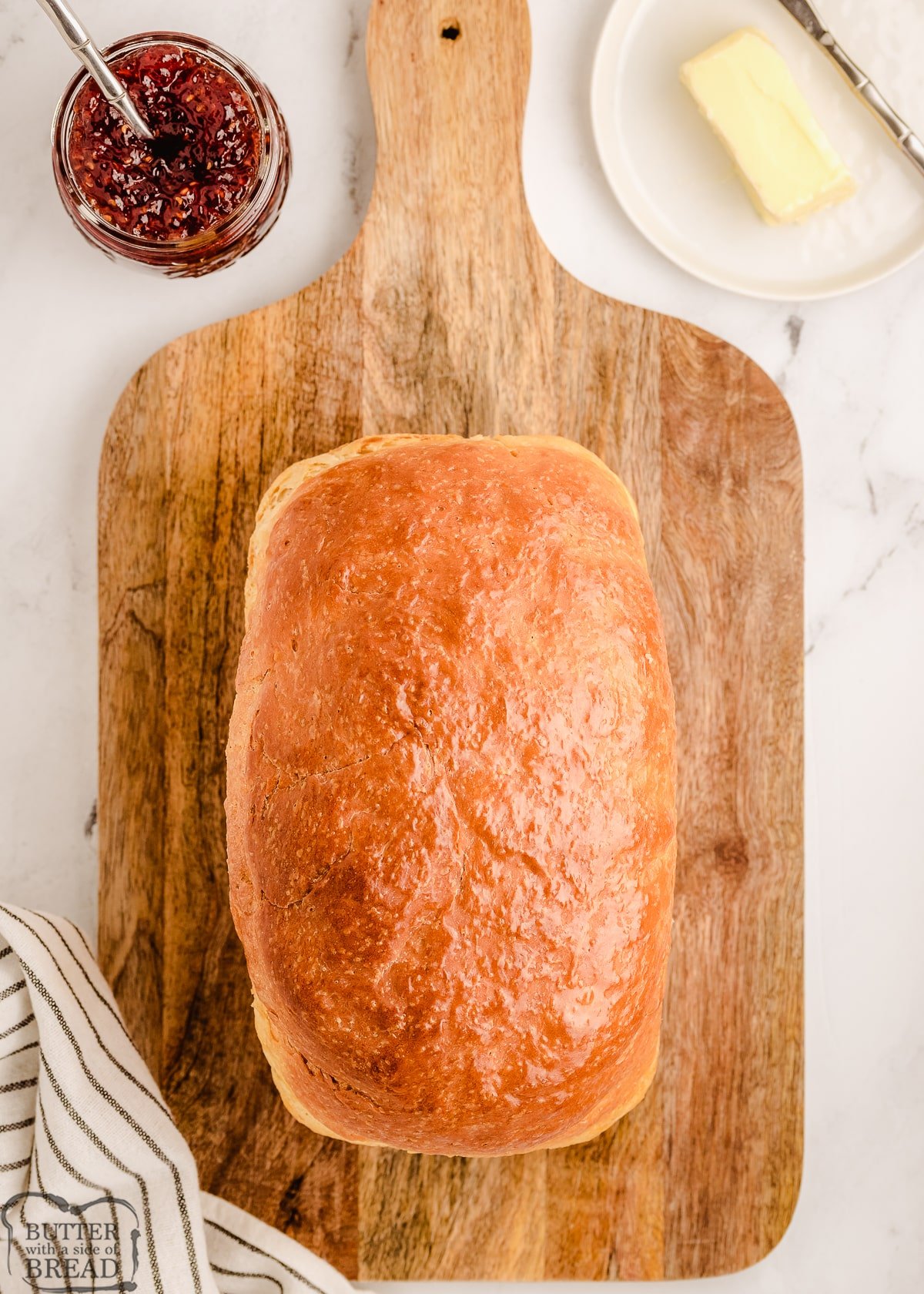
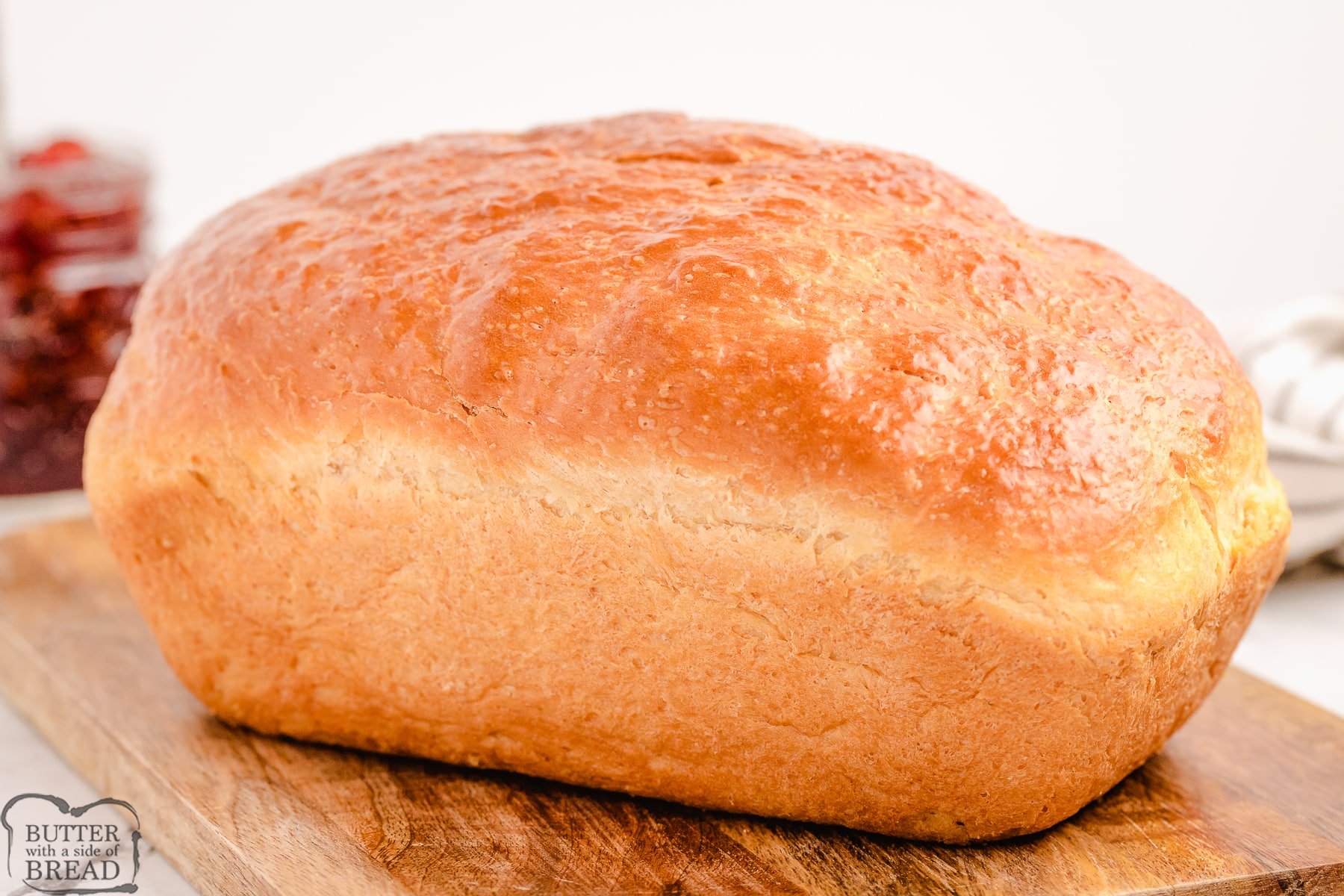
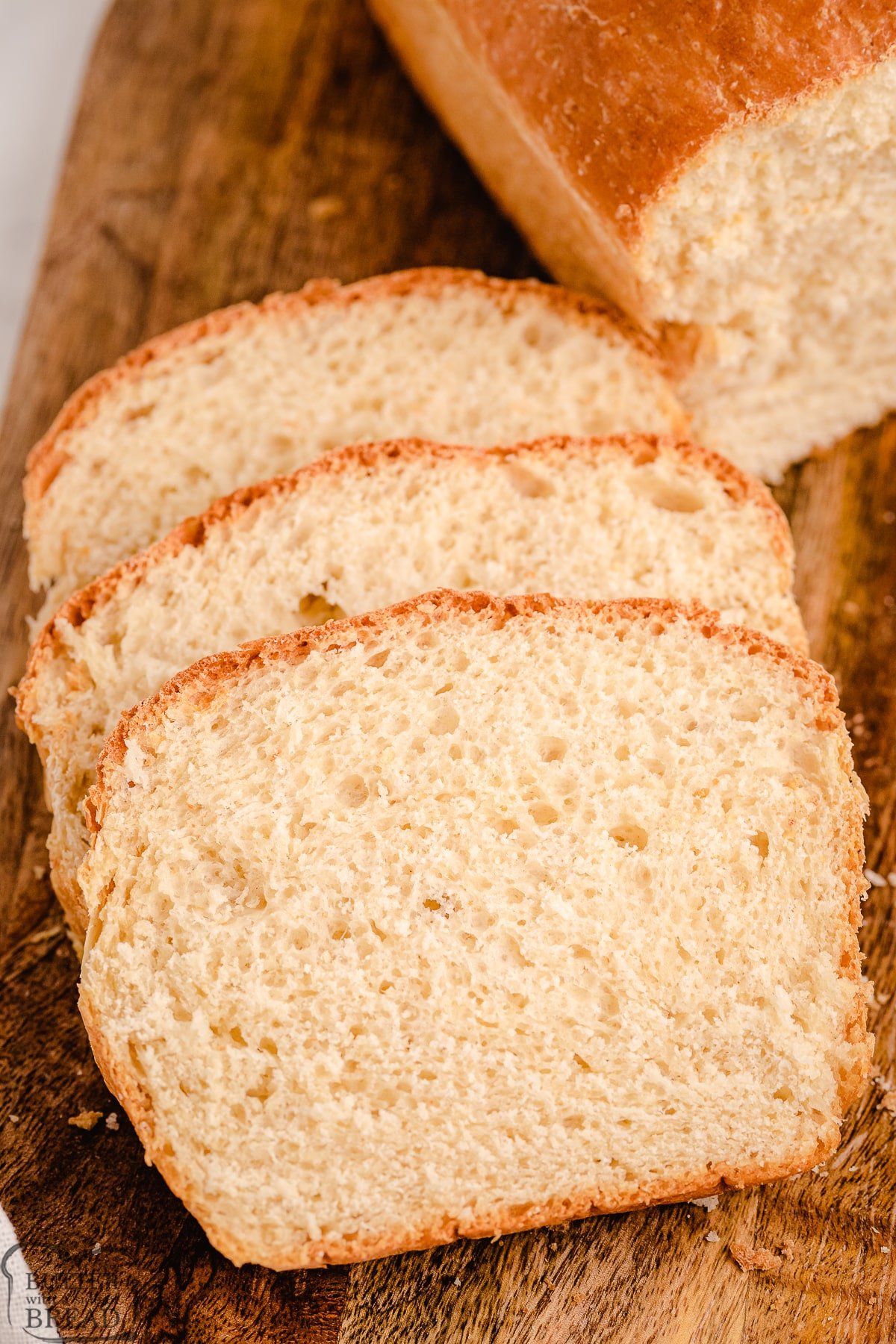
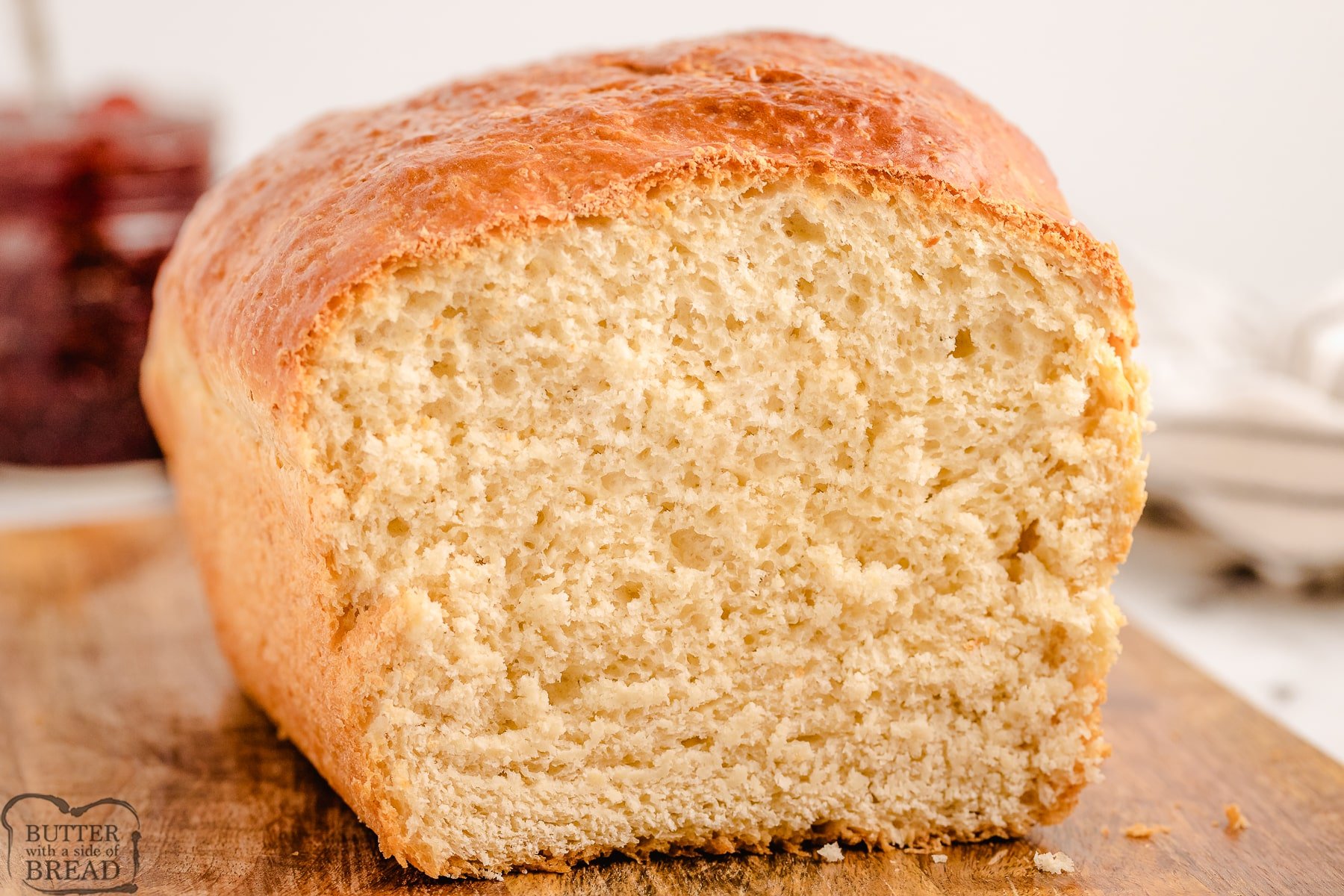
Homemade Buttermilk Bread made easy at home with 6 ingredients! This buttermilk bread creates a soft loaf that has incredible texture & tastes divine!
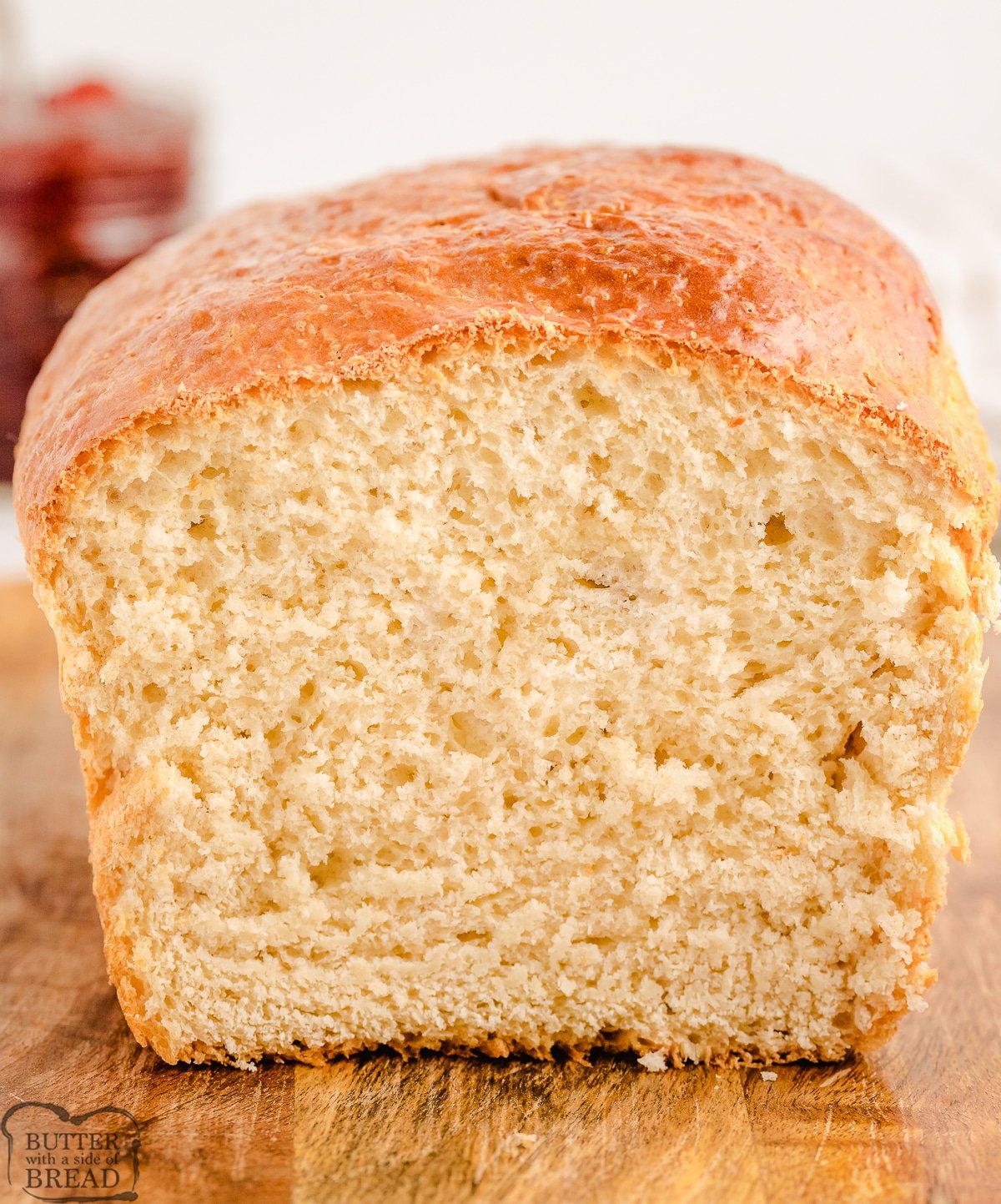
Making this soft bread recipe is so simple, made with just a handful of ingredients that are most likely already in your kitchen and pantry. Buttermilk bread has such a delicate texture and tastes incredible too, give it a try today and see how amazing it is!
This buttermilk bread is a fantastic next step after you’ve figured out how to make bread from scratch.
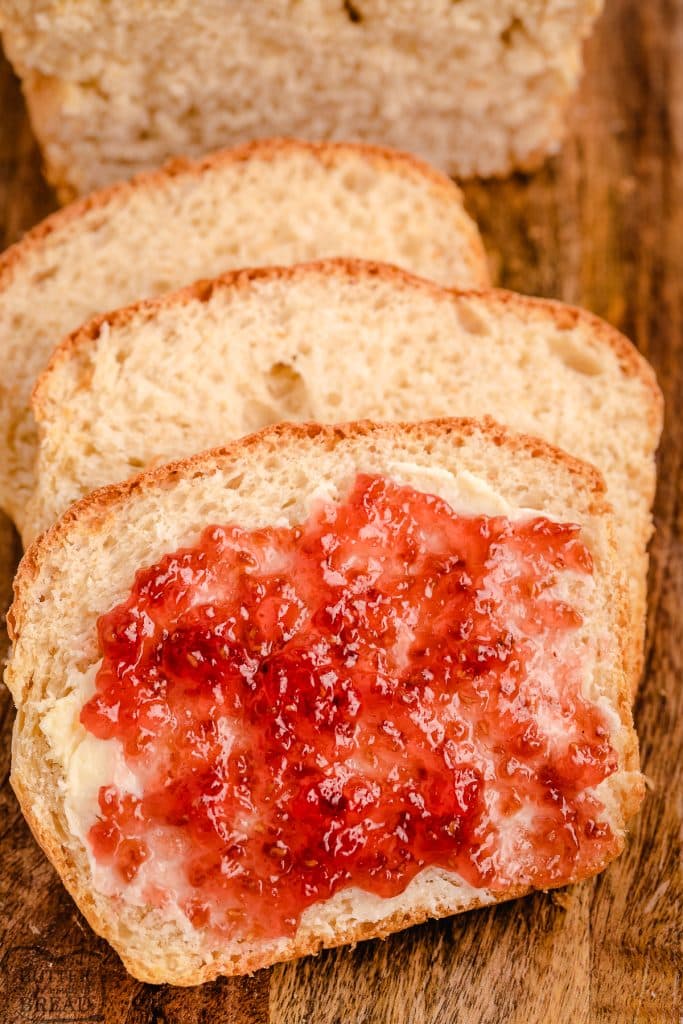
Tips to create the BEST bread every time
If you have never baked homemade bread before, here are a few tips that will help you make the most delicious and soft bread ever.
- Remember to fully knead. The recipe below kneads for 10 minutes and it is worth every minute. Kneading dough helps to develop the flavor and texture of the bread, so don’t skimp on kneading time.
- Weather can affect your ingredients. If you live in a moist climate, chances are you will need at least the recommended amount of flour, maybe even 1/4 cup to 1/2 cup more. Bread dough should be sticky, but still manageable, especially after the first rise. While you are kneading, the dough should come together and pull away from the sides of the bowl, leaving the bowl mostly clean. (I try not to add too much flour because your bread will be more dense.) When you pick the dough up, some will stick to your fingers. After the first rise, it will be easier to handle!
- Kitchen too cool to rise? In the wintertime when my house is cooler than normal, I like to turn the oven on for 2-3 minutes, then turn it off and let the bowl of dough rise in there. The oven traps the heat for a longtime and it is the perfect atmosphere for rising dough.
- After the first rise, don’t overwork the dough. I usually knead and shape my dough in about 1 minute, then it is back in the pan to rest, for the 2nd rise. I like to have the pan rise in the oven for this second rise so that I don’t have to worry about moving risen dough. I just turn the oven on and set the timer to bake!
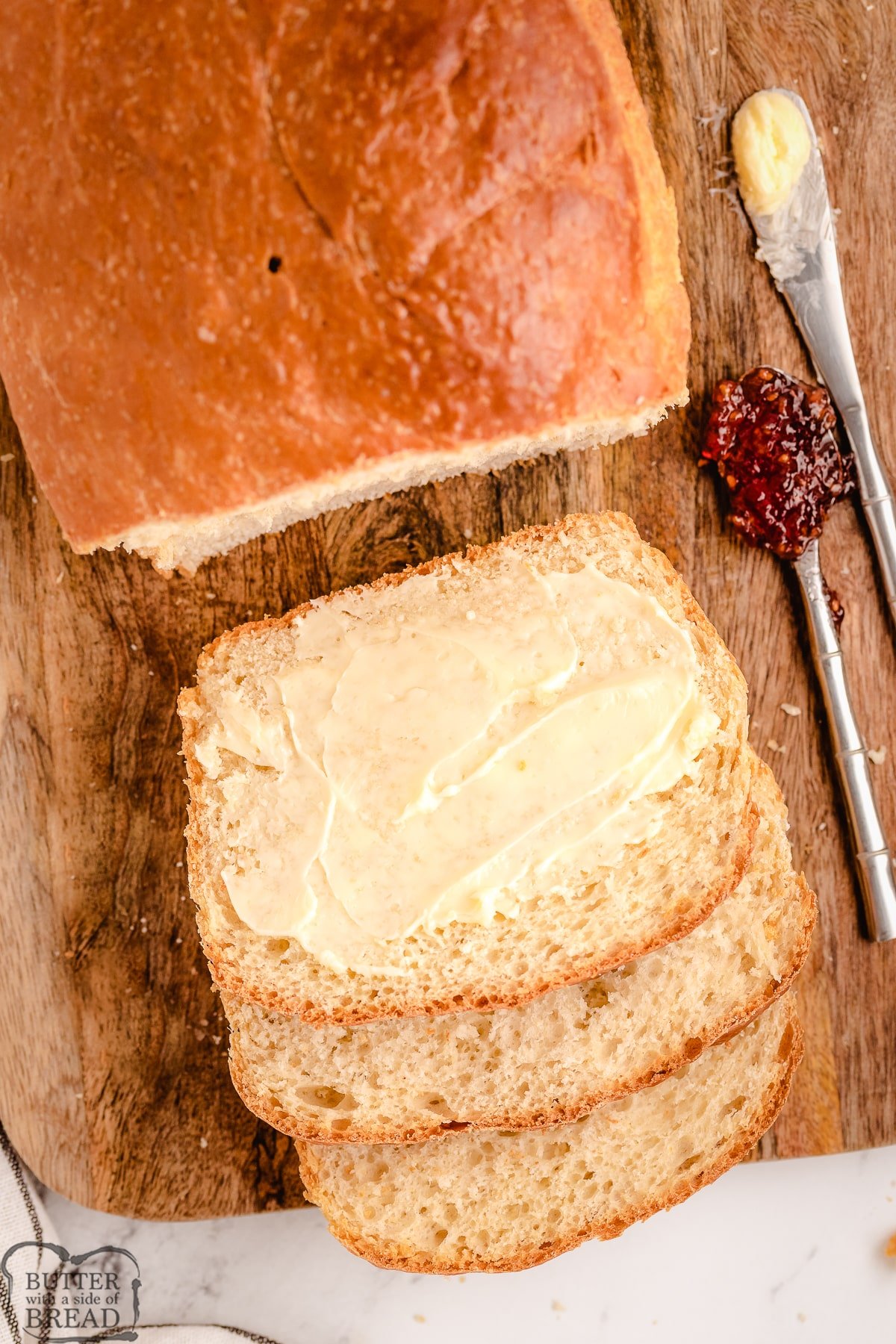
Can I made this Homemade Buttermilk Bread in a Bread Machine?
YES! I have had wonderful results making this Buttermilk Bread in my bread machine. You don’t have to make any ingredient changes either- simple add them to your bread machine pan in the order listed below. I used the “Basic White Bread” setting with a light crust and it turned out beautifully.
Homemade Buttermilk Bread Ingredients
Buttermilk: You will need 1 ½ cups of buttermilk* to create the most amazing homemade bread.
Butter: Adding in 2 tablespoons of melted butter will make this bread rich in taste.
Sugar: Use 2 tablespoons of sugar to help sweeten this bread up perfectly.
Salt: You will want to add in 1 teaspoon of salt to help balance the flavors in this bread well.
Flour: The base of this recipe is 3 ½ cups of all-purpose or bread flour.
Yeast: To make the bread rise properly, you will need 1 tablespoon of yeast.
Helpful Tips when Making Your a Loaf of Soft Bread:
If you’ve never baked homemade bread before, here are a few tips:
1. Remember to fully knead
The recipe below kneads for 7 minutes and it’s worth it! Kneading dough helps to develop the flavor and texture of the bread, so don’t skimp on kneading time.
2. Weather can affect your ingredients
If you live in a moist climate, chances are you’ll need at least the recommended amount of flour, maybe even 1/4 cup to 1/2 cup more. Bread dough should be sticky, but still manageable, especially after the first rise. While you’re kneading, the dough should come together and pull away from the sides of the bowl, leaving the bowl mostly clean. I usually aim to have the very bottom of the dough still attached to the bowl. Try not to add too much flour because your bread will be more dense. When you pick the dough up, some will stick to your fingers. After the first rise, it will be easier to handle!
3. Temperature affects how long your bread takes to rise
If your house is cool, your bread will take longer to rise. In the wintertime when my house is cooler than normal, I like to turn the oven on for 2-3 minutes, then turn it off and let the bowl of dough rise in there. The oven traps the heat for a longtime and it’s the perfect atmosphere for rising dough.
4. Don’t overwork the dough
Try not to go crazy kneading your bread after the first rise. I usually knead and shape my dough in about 1 minute, then it’s back in the pan to rest, for the 2nd rise. I like to have the pan rise in the oven for this second rise so that I don’t have to worry about moving risen dough. When it’s fully risen, I just turn the oven on and set the timer to bake!

HOMEMADE BUTTERMILK BREAD
Ingredients
Instructions
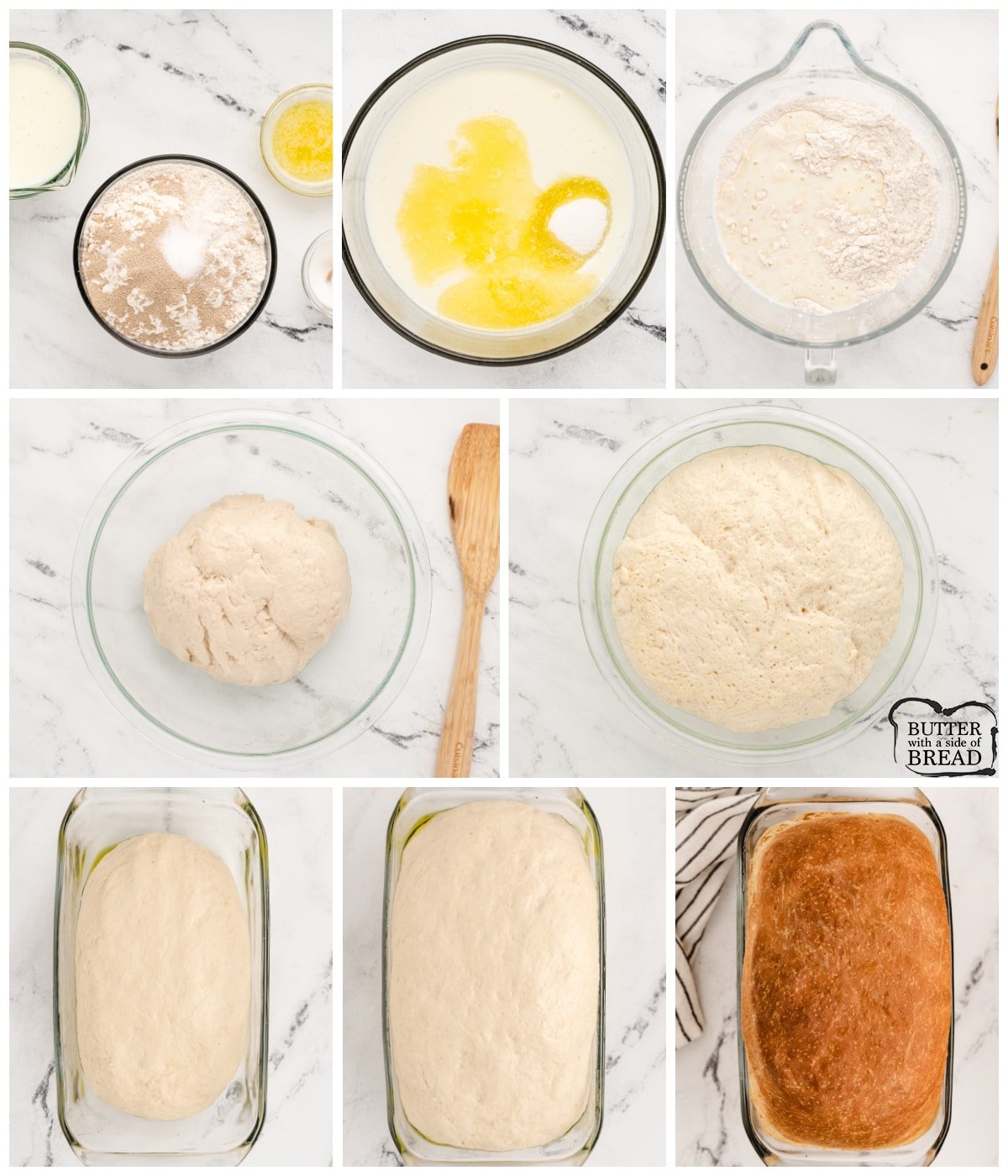
- Dough prep: Start by combining the buttermilk, melted butter and sugar in a large mixing bowl.*
- Then, in a separate bowl, combine the salt, flour and yeast. Whisk the dry ingredients together to combine, then add them to the wet buttermilk mixture in the mixing bowl. Mix all ingredients together until well combined (I use a KitchenAid Mixer.) I like about a quarter sized amount of dough to be sticking on the very bottom.
- If your dough looks a bit dry, add in another splash of buttermilk. Once you have achieved a good consistency, mix the dough on low for about 6-7 minutes (or knead by hand about 10 minutes). Proper kneading is critical to great textured homemade bread!
- First rise: Once the dough is done kneading, proceed to cover the bowl with a towel and let it rise in a warm place for about 1 hour; until the dough has doubled in size.
- Second rise: After the first rise, punch the dough down and knead several times, then shape the dough (I like to roll mine, then tuck the ends under) and place in a greased bread loaf pan. Place the dough back in the warm spot and let it rise for another 30-45 minutes.
- Bake: Get the oven preheating to 350 degrees F. Once the second rise is complete, bake the dough for about 30-35 minutes, until the top is golden brown. Let the bread cool in the pan for 10-15 minutes after baking is complete, then overturn the pan and turn the loaf out onto a cooling rack or folded towel to finish cooling. When ready to enjoy, slice, serve and enjoy!
Video
Notes
Nutrition
📫 Save this recipe! Send it to your email! 📩
I consent to receiving emails from this site.
HOW TO AVOID SUNKEN BREAD
The easiest and best way to avoid sunken bread is to use a cooking thermometer to check the inside of the loaf. Fully cooked bread will register 200°F on a thermometer. My all-time favorite thermometer is the Thermapen. It’s super fast and incredibly durable. Another great cooking thermometer is the ThermoPop which is a more basic version that works just as well!
BEST BREAD PAN?
I bake a lot of bread and the pans I prefer are either ceramic, glass or cast iron. These pans will bake bread more evenly and release the bread more easily after baking. I don’t like using dark or nonstick pans because the bread cooks unevenly. It darkens on the outside before the bread is cooked on the inside, so the coloring is uneven. Read more about which bread pan is the best here!
How can you tell if bread is fully baked?
I like to use a food thermometer. Mine is digital, so it’s very easy to use. Fully cooked bread will be 190-200 degrees F. Since this bread contains a lot of milk, I don’t take it out of the oven until it reaches 200 degrees F. The top will be golden brown.
Here are even more recipes for homemade bread to try:
- Honey Wheat Bread
- Homemade Hawaiian Bread
- Honey Oat Bread recipe
- Cinnamon Raisin Bread
- Fabulous French Bread
- Homemade Hawaiian Bread
- Potato Bread Recipe
- White Bread Recipe
Homemade Buttermilk Bread can now be baked easily and fresh from the comfort of your own kitchen with 6 ingredients! This buttermilk bread creates a soft loaf that has incredible texture & tastes divine!







Kathy says
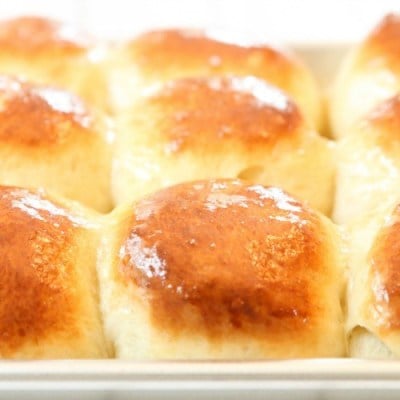
Today is Christmas Eve, 2022. I wanted dinner rolls with our turkey supper and happily stumbled across your recipe. Your bread looked so good, I had to try it for my dinner rolls. WOW! What a fabulous recipe! I just took them out of the oven and they looked and smelled so good, we didn’t even wait for supper…we tried them immediately. The rolls are light, fluffy and absolutely the best buttermilk rolls I’ve ever had. They’re so delicious, I don’t think they’ll last until supper so I’ll probably have to make another batch before the day is through. Your recipe is PERFECT! I’ve been baking my own bread for 50+ years and this is a simple, beautiful recipe that I’ll be using many times over.
For those who might wonder what I did to make this recipe into rolls: First, I heeded the instructions. Secondly, I don’t have a mixer, so I hand knead my bread — 10 minutes for this bread is needed (hahaha). After the first rise was done, I punched down the dough, kneaded it a little and flattened it with my hands into a circle, then cut it in quarters, then thirds on each quarter. I rolled each triangle into balls and spaced the 12 balls in a 13″ x 9″ Pyrex dish. I let them rise about a 1/2 hour and put in my preheated 375 oven for 20 minutes.
I know baking in different areas of the world with various altitudes can make a difference. I live in the southwest area in Trout Lake, Washington with an altitude of about 2000 feet and have a propane oven/stove. Adjust (or not) according to your home zone and you’ll have much success. This recipe is THE best Buttermilk Bread recipe ever in my opinion. Thanks so much for posting it!
Jessica says
Love that you made this into rolls- and SO glad to hear you enjoyed it!!
Jane Petroski says
Can you use powdered buttermilk?
Jessica says
i’ve not tried it with powdered buttermilk, but it’s worth a shot! You’ll have to reconstitute it of course.
Kathy says
I have made this recipe several times over last several weeks successfully with powdered buttermilk. The exact ratio I use is 1 1/3 c. water and 2 Tbsp. powdered buttermilk. I have to constantly make this bread because it disappears so fast in our house. It’s REALLY delicious!
Donna says
I only have Instant Yeast. If making it in a breadmachine, would the amount of Yeast need to be adjusted if using Instant?
Mattie Gale says
I use powdered buttermilk and add it to the flour dry. I was the water, dissolve the sugar in the warm water, add and proof the yeast, then add the powdered buttermilk to the dry ingredients. It works well, no need to reconstitute, although you can if you wish.
Shelley says
What size loaf does this make? Want to try in a bread machine that can be set for 1, 1.5, or 2 lb loaves.
Jessica says
I’d use the 1.5 lb size.
Shelley says
Have tried twice… but neither time has it risen well (although good flavor). Does the buttermilk need to be warmed to activate the yeast?
Ron says
Sĥelley, yes you should probably warm the buttermilk so it is not cold. I didn’t because it’s not necessary but it will cause the dough to proof slower.
Debra Leist says
I made this recipe exactly as written except I did heat the buttermilk to melt the butter. I didn’t use a big enough bread pan because I’m used to using the 8 inch ones. The proper bread pan is important because when I put it into the oven to bake it expanded so much it blew out on one side. Finished baking it and used a thermometer to check for doneness. Let it cool and just had a slice, being shaped funny didn’t take anything away from the taste. Absolutely wonderful. I will be baking this bread again soon. The recipe is so easy and it came together so good. I didn’t have any sticky spots in my mixer just really smooth dough. Thanks for sharing this recipe.
Jessica says
Glad you liked it Debra! It’s one of my favorites!
Christine says
Hello, I love this recipe and I do use powdered buttermilk. I have been baking this bread weekly for about 4 months. Getting ready to make a loaf now!
Jessica says
So glad to hear you enjoy it Christine!
mary says
can you sub gluteen free flour, I made it but maybe should of put it in bread pan and no rise it really rose on 1st rise but fell when i put it in bread pan and oven
Jessica says
Hi Mary, yes, it will fall when you switch it from the first rise to the bread pan. But that’s why we do a 2nd rise in the bread pan before baking. I haven’t tested this recipe with gluten-free flour, but I imagine a good blend will work out fantastic!
Laz says
Great recipe! I would say the result is somewhere between white bread and brioche. I halved the recipe and the loaf came out nicely browned with the texture of a bread shaped pillow. It would probably make for great sandwich bread and french toast.
Erin says
I love and use this buttermilk bread recipe all the time to make my own bread at home.My fiance and I have not bought store bought bread for a long time since I can now make delicious and fresh homemade bread at home and we save money too! Thank you!
Jessica says
I’m so glad you like it Erin!!
Jennifer Finnigan says
What kind of yeast did you use for this recipe? I have active dry and I am not sure if it worked properly. The dough is not rising at all. It could be that I miscounted the flour though because the dough seems wetter than regular yeast bread dough.
Jessica says
If your dough didn’t rise at all, then your yeast did not work. Maybe try proofing the yeast next time? That would ensure your yeast is alive and well.
Jess says
For those who don’t get a rise and the yeast is within date (though I’ve successfully used several months old if kept in cool, dry, and dark place) you should use instant or rapid yeast. I’ve actually never seen a recipe use standard active yeast without proofing. For me, I don’t think instant produces exactly the same result as active, so I proof it in a little water and put the sugar in there. I just subtract slightly from the buttermilk (though not the full amount) as I add flour when I knead.
I start in the kitchen aid for a couple minutes and then finish off by hand. I do think I get a better result. It does say that 2 minutes should be adequate in a mixer, but I don’t think for the this recipe, it’s enough.
All that being said for suggestions.
The flavor and texture of the bread is darn amazing! I really enjoy the recipe and it’s a great way to use up buttermilk. I suggest using a full fat cultured buttermilk as well if you can find it. I agree it’s between brioche and standard white bread.
A keeper for sure!
Marita Dennis says
My husband’s favorite bread recipe! No alterations make as directed and it turns out perfect every time!! I do however, choose to use bread flour as it doesn’t cause crumbly crust. This is first recipe I tried from the website and now I’m a fan of several different recipes.
Gabrielle says
Made it in the bread machine and it was really lovely. Light and fluffy, not that strong a Buttermilk flavor but I think that’s because mine didn’t really clabber.
I kept the yeast, salt and sugar separate and then let the machine do the rest. Great idea to use a food thermometer to check for doneness.
I would definitely make this again.
Jessica says
So glad you liked it!
Deb says
Made this bread in my KitchenAid mixer. I used regular rise yeast, bread flour and my own homemade buttermilk from making my own butter. I did have to add about a quarter cup more of buttermilk because the dough was a little too stiff which worked perfectly. I figured if it turns out too sticky I could always add a little more flour but I didn’t have to. Kneaded in the mixer with a dough hook for about 6 – 7 minutes checking a couple times, scraping the dough. I used a glass loaf pan and it turned out great, moist and soft.
Jessica says
So glad to hear Deb!!
Val says
I just started making my own butter. I found this recipe to use the buttermilk for my bread. Easy and delicious.
Kim Rakyta says
Made this for the first time today. It is excellent! I’ll definitely be making this again. Great recipe!😊
sandi says
Is it necessary to heat the buttermilk?
Jessica says
You don’t have to!
Christine R says
I just finished making another five loaves. This has been my go to bread recipe for over a year now. I make all my own bread and like a denser bread than store bought. THIS IS PERFECT. I usually use one recipe and halve it into two smaller loaves to share with two neighbors. I use a large microwavable mug and combine the buttermilk, cold butter and sugar then microwave for one minute and 45 seconds. Heats it to 100-110°F in my microwave. Sometimes I add a cup of shredded American cheese in the last two minutes of mixing in my stand mixer. Thanks again for sharing.
Nellie says
Thanks for sharing all of your suggestions…I love the idea of adding cheese!
Jacqueline Carrano says
Hi, will one packet be enough to make this bread? The packets are under a tablespoon but it’s all I have. Thanks
Jessica says
Yes you can make it with 1 packet of yeast. You might have to let it rise longer both times though!
Linda Gibson says
I made this bread tonight and it is delicious. Does this bread freeze well?
Rahel Haile says
Great recipe ! I had a lot of fun baking with your recipe.
Thank you.