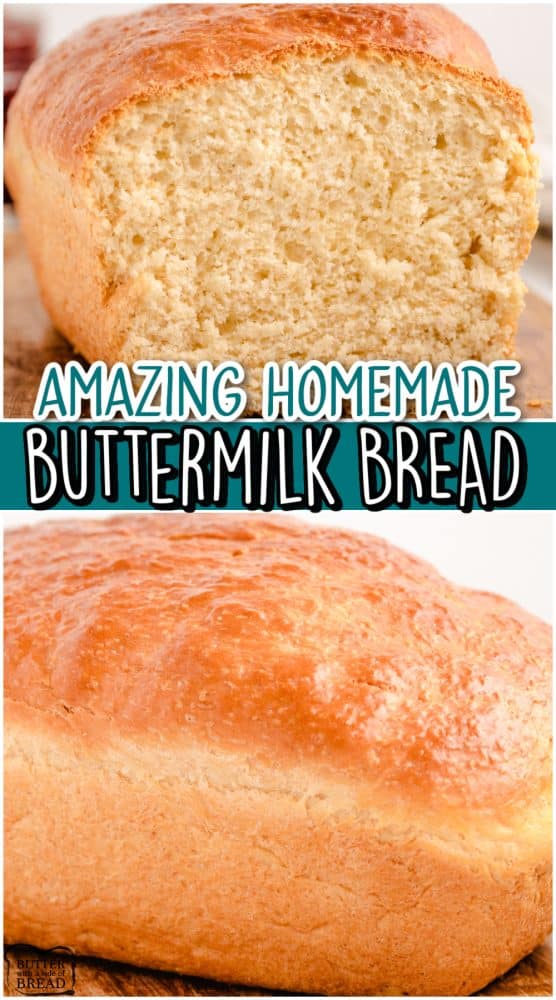
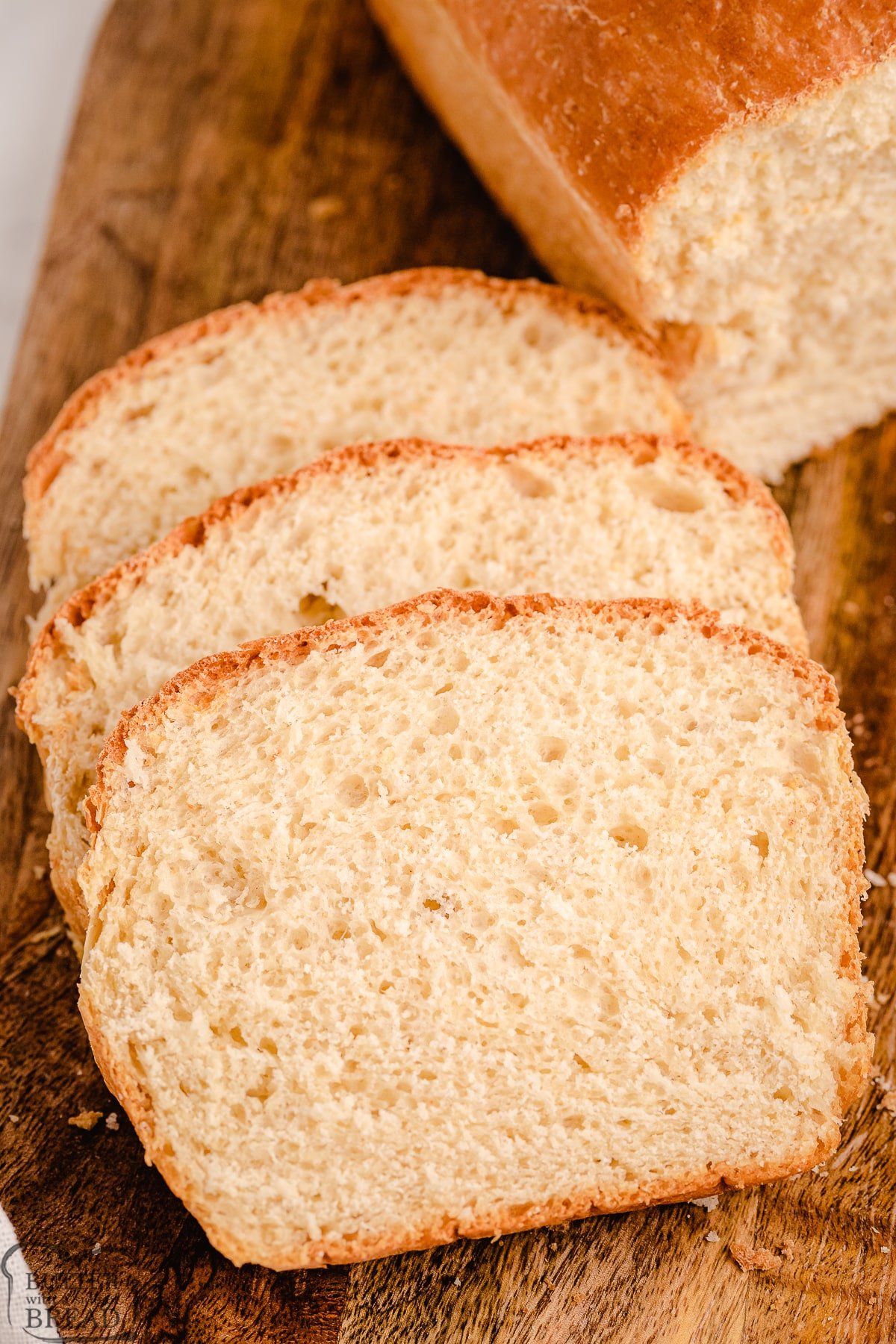
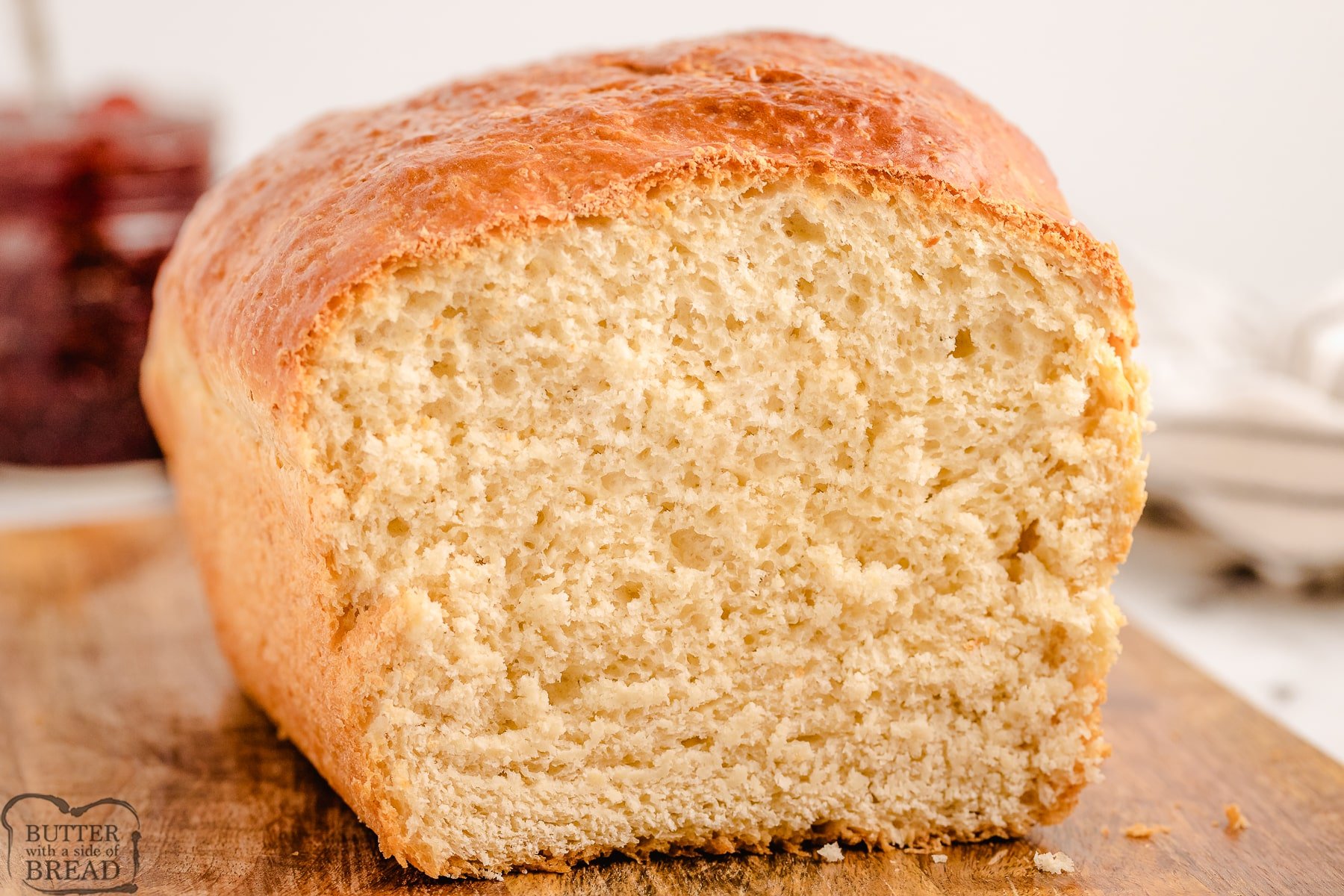
Homemade Buttermilk Bread made easy at home with 6 ingredients! This buttermilk bread creates a soft loaf that has incredible texture & tastes divine!
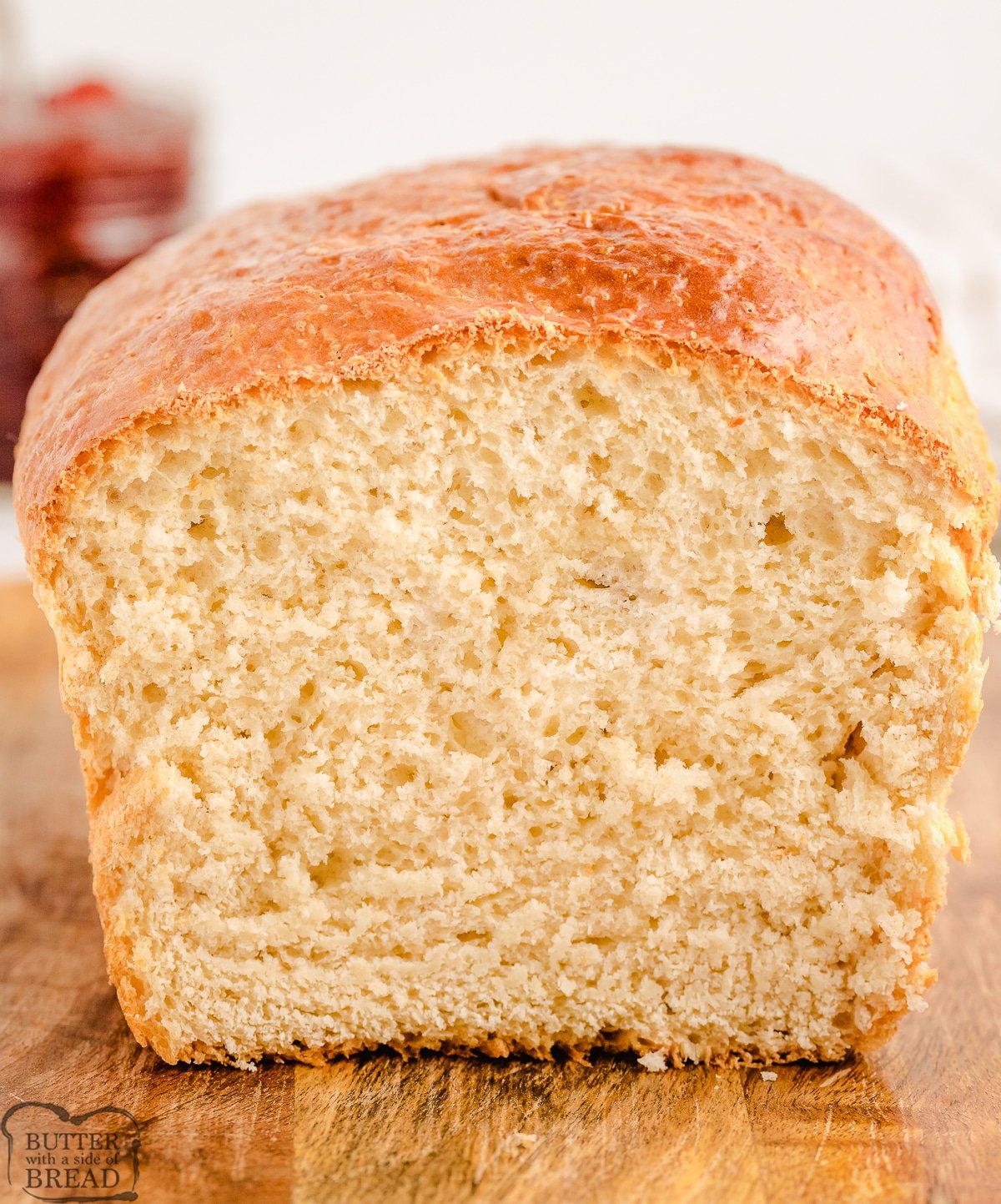
Making this soft bread recipe is so simple, made with just a handful of ingredients that are most likely already in your kitchen and pantry. Buttermilk bread has such a delicate texture and tastes incredible too, give it a try today and see how amazing it is!
This buttermilk bread is a fantastic next step after you’ve figured out how to make bread from scratch.
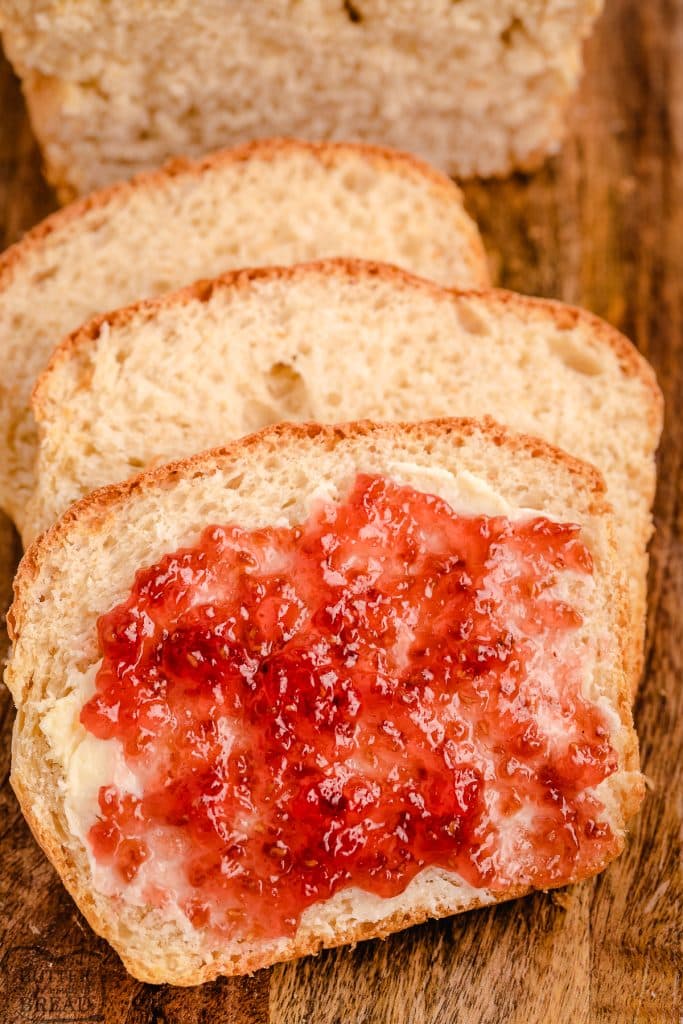
Tips to create the BEST bread every time
If you have never baked homemade bread before, here are a few tips that will help you make the most delicious and soft bread ever.
- Remember to fully knead. The recipe below kneads for 10 minutes and it is worth every minute. Kneading dough helps to develop the flavor and texture of the bread, so don’t skimp on kneading time.
- Weather can affect your ingredients. If you live in a moist climate, chances are you will need at least the recommended amount of flour, maybe even 1/4 cup to 1/2 cup more. Bread dough should be sticky, but still manageable, especially after the first rise. While you are kneading, the dough should come together and pull away from the sides of the bowl, leaving the bowl mostly clean. (I try not to add too much flour because your bread will be more dense.) When you pick the dough up, some will stick to your fingers. After the first rise, it will be easier to handle!
- Kitchen too cool to rise? In the wintertime when my house is cooler than normal, I like to turn the oven on for 2-3 minutes, then turn it off and let the bowl of dough rise in there. The oven traps the heat for a longtime and it is the perfect atmosphere for rising dough.
- After the first rise, don’t overwork the dough. I usually knead and shape my dough in about 1 minute, then it is back in the pan to rest, for the 2nd rise. I like to have the pan rise in the oven for this second rise so that I don’t have to worry about moving risen dough. I just turn the oven on and set the timer to bake!
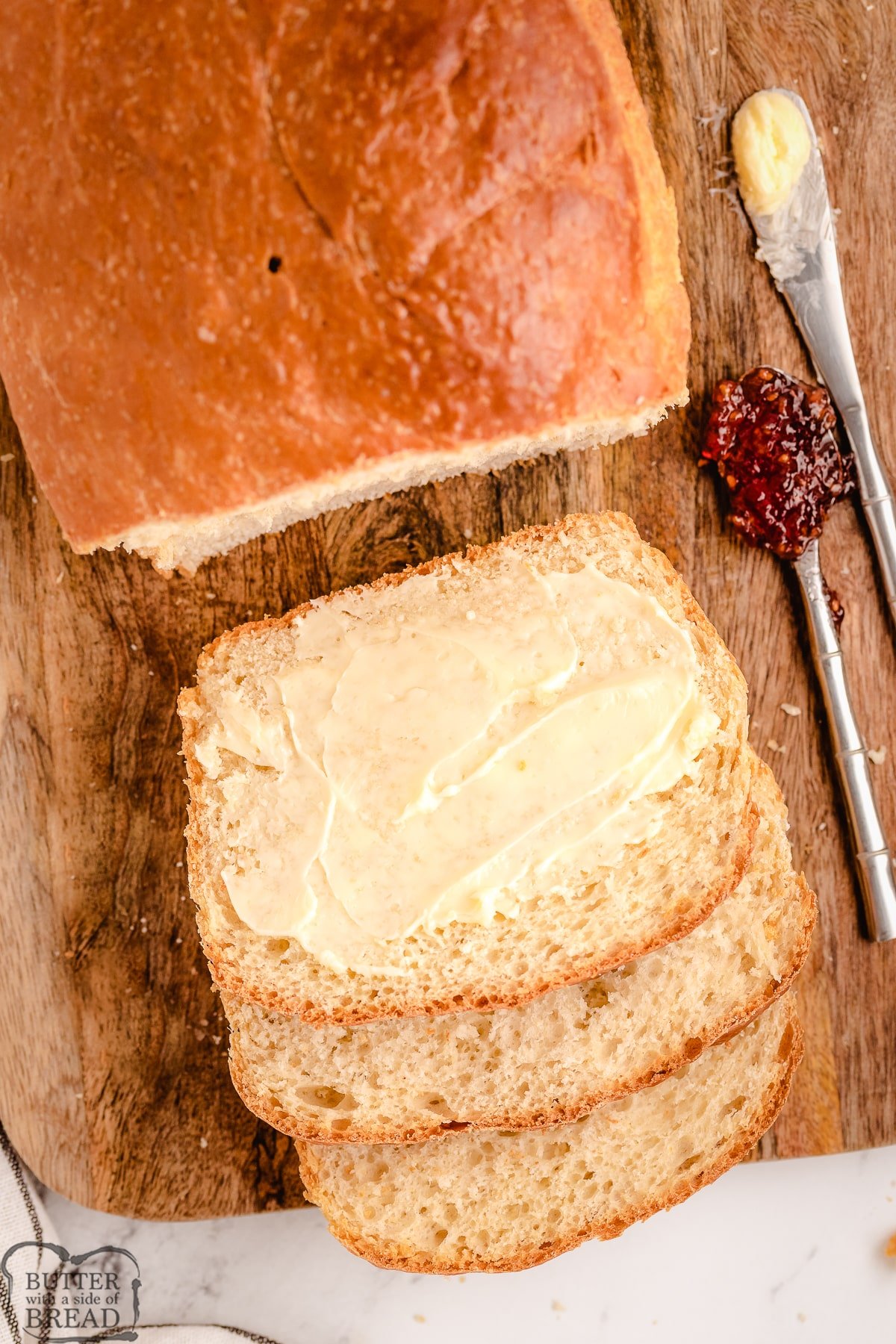
Can I made this Homemade Buttermilk Bread in a Bread Machine?
YES! I have had wonderful results making this Buttermilk Bread in my bread machine. You don’t have to make any ingredient changes either- simple add them to your bread machine pan in the order listed below. I used the “Basic White Bread” setting with a light crust and it turned out beautifully.
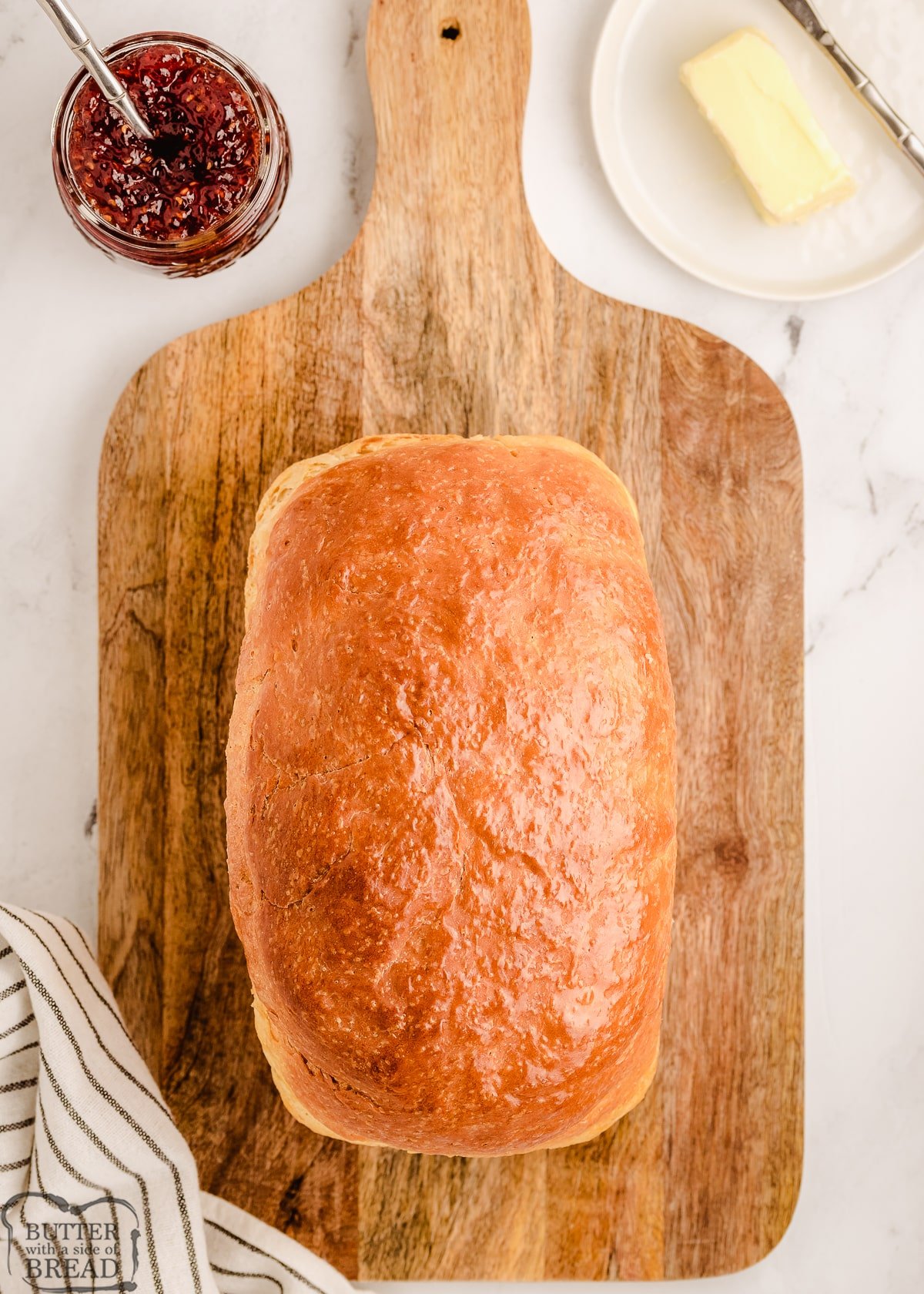
Homemade Buttermilk Bread Ingredients
Buttermilk: You will need 1 ½ cups of buttermilk* to create the most amazing homemade bread.
Butter: Adding in 2 tablespoons of melted butter will make this bread rich in taste.
Sugar: Use 2 tablespoons of sugar to help sweeten this bread up perfectly.
Salt: You will want to add in 1 teaspoon of salt to help balance the flavors in this bread well.
Flour: The base of this recipe is 3 ½ cups of all-purpose or bread flour.
Yeast: To make the bread rise properly, you will need 1 tablespoon of yeast.
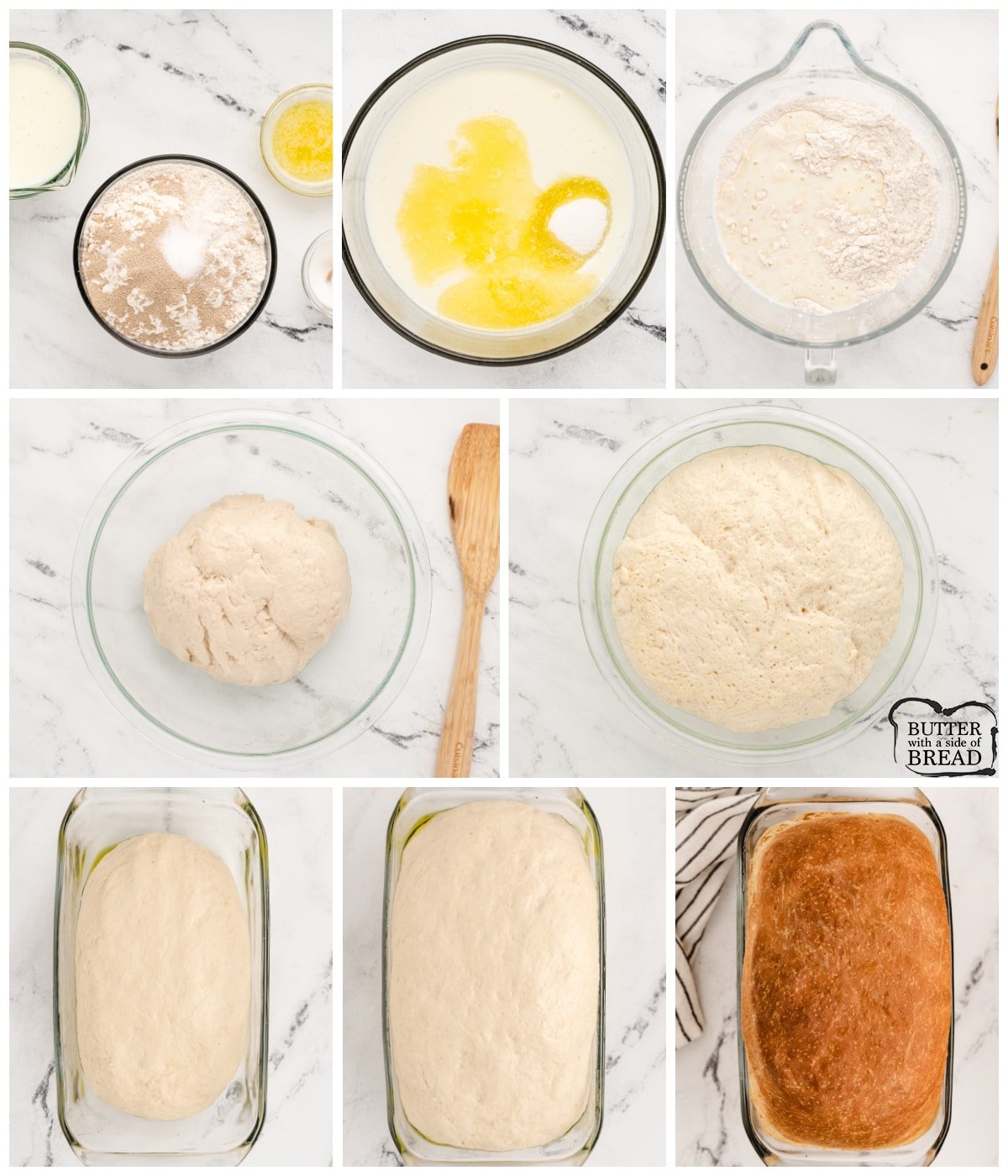
Helpful Tips when Making Your a Loaf of Soft Bread:
If you’ve never baked homemade bread before, here are a few tips:
1. Remember to fully knead
The recipe below kneads for 7 minutes and it’s worth it! Kneading dough helps to develop the flavor and texture of the bread, so don’t skimp on kneading time.
2. Weather can affect your ingredients
If you live in a moist climate, chances are you’ll need at least the recommended amount of flour, maybe even 1/4 cup to 1/2 cup more. Bread dough should be sticky, but still manageable, especially after the first rise. While you’re kneading, the dough should come together and pull away from the sides of the bowl, leaving the bowl mostly clean. I usually aim to have the very bottom of the dough still attached to the bowl. Try not to add too much flour because your bread will be more dense. When you pick the dough up, some will stick to your fingers. After the first rise, it will be easier to handle!
3. Temperature affects how long your bread takes to rise
If your house is cool, your bread will take longer to rise. In the wintertime when my house is cooler than normal, I like to turn the oven on for 2-3 minutes, then turn it off and let the bowl of dough rise in there. The oven traps the heat for a longtime and it’s the perfect atmosphere for rising dough.
4. Don’t overwork the dough
Try not to go crazy kneading your bread after the first rise. I usually knead and shape my dough in about 1 minute, then it’s back in the pan to rest, for the 2nd rise. I like to have the pan rise in the oven for this second rise so that I don’t have to worry about moving risen dough. When it’s fully risen, I just turn the oven on and set the timer to bake!

HOMEMADE BUTTERMILK BREAD
Ingredients
Instructions
- Dough prep: Start by combining the buttermilk, melted butter and sugar in a large mixing bowl.*
- Then, in a separate bowl, combine the salt, flour and yeast. Whisk the dry ingredients together to combine, then add them to the wet buttermilk mixture in the mixing bowl. Mix all ingredients together until well combined (I use a KitchenAid Mixer.) I like about a quarter sized amount of dough to be sticking on the very bottom.
- If your dough looks a bit dry, add in another splash of buttermilk. Once you have achieved a good consistency, mix the dough on low for about 6-7 minutes (or knead by hand about 10 minutes). Proper kneading is critical to great textured homemade bread!
- First rise: Once the dough is done kneading, proceed to cover the bowl with a towel and let it rise in a warm place for about 1 hour; until the dough has doubled in size.
- Second rise: After the first rise, punch the dough down and knead several times, then shape the dough (I like to roll mine, then tuck the ends under) and place in a greased bread loaf pan. Place the dough back in the warm spot and let it rise for another 30-45 minutes.
- Bake: Get the oven preheating to 350 degrees F. Once the second rise is complete, bake the dough for about 30-35 minutes, until the top is golden brown. Let the bread cool in the pan for 10-15 minutes after baking is complete, then overturn the pan and turn the loaf out onto a cooling rack or folded towel to finish cooling. When ready to enjoy, slice, serve and enjoy!
Video
Notes
Nutrition
📫 Save this recipe! Send it to your email! 📩
I consent to receiving emails from this site.
HOW TO AVOID SUNKEN BREAD
The easiest and best way to avoid sunken bread is to use a cooking thermometer to check the inside of the loaf. Fully cooked bread will register 200°F on a thermometer. My all-time favorite thermometer is the Thermapen. It’s super fast and incredibly durable. Another great cooking thermometer is the ThermoPop which is a more basic version that works just as well!
BEST BREAD PAN?
I bake a lot of bread and the pans I prefer are either ceramic, glass or cast iron. These pans will bake bread more evenly and release the bread more easily after baking. I don’t like using dark or nonstick pans because the bread cooks unevenly. It darkens on the outside before the bread is cooked on the inside, so the coloring is uneven. Read more about which bread pan is the best here!
How can you tell if bread is fully baked?
I like to use a food thermometer. Mine is digital, so it’s very easy to use. Fully cooked bread will be 190-200 degrees F. Since this bread contains a lot of milk, I don’t take it out of the oven until it reaches 200 degrees F. The top will be golden brown.
Here are even more recipes for homemade bread to try:
- Honey Wheat Bread
- Homemade Hawaiian Bread
- Honey Oat Bread recipe
- Cinnamon Raisin Bread
- Fabulous French Bread
- Homemade Hawaiian Bread
- Potato Bread Recipe
- White Bread Recipe
Homemade Buttermilk Bread can now be baked easily and fresh from the comfort of your own kitchen with 6 ingredients! This buttermilk bread creates a soft loaf that has incredible texture & tastes divine!






Rosie says
Do you warm up the buttermilk with sugar
Jessica says
It’s not necessary to warm it up! Crazy, right?!
Lindsay says
As to the yeast… Would you please clarify for me if it’s A Dry or Instant that you are using?! I used SAF Instant yeast yesterday (I have both types on hand) and the top completely sunk in on me, it smelled amazing so it was a real bummer. Please and thank you in advance.
Jessica says
Types of yeast isn’t the cause of sunken bread. I’ve used both kinds in this recipe- the rise time will vary, but that’s about it. Most often my bread sinks when the inside of the loaf isn’t fully cooked. Different bread pans will need to be baked different times, which is why I recommend using a cooking thermometer to test the inside to see if it’s fully baked. You aim for 200 degrees.
Rose Jackson says
I just made this recipe in my bread machine and got to say, some of the best bread ever. So easy to make, I don’t want store bought ever again. Thank you so much for sharing this recipe.
Alison says
I’m so happy this worked so well for you Rose!
Ximena says
So easy to make. It came out perfect 😊😊
Jessica says
So glad to hear that you enjoyed it!
Jessie says
Hi Jessica! Making this today. Can I shape into buns before the 2nd rise?
Thanks!!
Li says
I don’t have a mixer. May i mix the ingredients with a spatula or whisk?
Jessica says
Yes, you can, just double all the mixing/ kneading times!
Zap says
Want to try this recipe but what’s the replacement for the buttermilk?
Nellie says
Real buttermilk works best in this recipe, but if you don’t have any, you can make your own. To make a buttermilk substitute, you just need to add 1 tablespoon of either white vinegar or lemon juice to regular milk and let it sit for a few minutes before adding to the recipe.
Priya says
If I want to substitute sugar with honey, how much honey should I use?
Jessica says
Honey is more sweet than sugar, so I’d half it- use 1 TBSP!
Shey says
Hi!
Can I use buttermilk powder for this recipe? And what is the ratio?
Thanks,
Shey
Jessica says
Not sure how you’d use buttermilk powder for this bread since it relies on it for moisture. Maybe check the side of the package for reconstituting instructions?
Anne says
I use Saco powdered buttermilk every time I make this. You just use water in the amount of buttermilk called for (1 1/2 cups) and the amount of buttermilk powder for the 1 1/2 cups – I think it’s 6 tablespoons. Add the powdered buttermilk with the dry ingredients.
I also use my bread machine for this bread. I set it on the dough setting, and take the dough out when it’s done. Then I put it in a greased loaf pan, let it rise a second time for about 40 minutes, and bake it at 350 for about 35 minutes. I’ve made it many times, and it’s turned out perfectly every time. Great recipe!
Shey says
Thank Anne for sharing! Have a great day!
Paz says
Did make it twice in the bread machine both times it sunk. Also came out very dry.
Jessica says
I’m not sure how to help you Paz. I haven’t tried this recipe on every available bread machine out there, but it works beautifully in mine.
Kristin says
I’m by no means a master baker but I’ve made many loaves of bread over the years and read many recipes. And I have no idea where my head was when I made this yesterday! I put the sugar in with the dry ingredients instead of with the milk and butter. When I realized it, I said OK, this has to be a forgiving recipe since I didn’t need to heat the buttermilk. Finished kneading the bread, put it in the bowl to rise, and realized I didn’t add the salt. Once again said OK, this has to be a forgiving recipe…put the dough back in the mixer bowl and mixed in the salt, let it rise, and then kneaded it a little more before I put it in the pan. It baked beautifully and I just ate my first slice with my breakfast. Oh my goodness, so good!! The inside crumb is light and moist and I love the tang from the buttermilk. So, give this recipe a try: It’s a very forgiving (and delicious) recipe!! 🙂
LINDA MAXWELL says
Can I double the recipe?
Jessica says
You can- just make sure your mixer can accommodate the larger amount of dough!
Nino says
I recently taught myself to make homemade bread and this was my first attempt at a buttermilk bread…..turned out FANTASTIC!!! Wow I can’t believe how soft and tasty this is. I took the advice of one of the commenters below and used Saco buttermilk powder (6TB per 1/2C water) and just mixed the powder in with the dry ingredients. Only issue I ran into is the mixture is stickier than the normal basic white bread recipes….is it supposed to be sticky? It’s not a “wet” sticky though. In any case it turned out fabulous.
Jessica says
So glad you enjoyed it Nino! I prefer a “stickier” bread dough- tacky is more like it. If you overwork the dough or add too much flour (so that it’s not sticky at all) I find the bread is more dense and drier. : )
Alex says
Made home made butter and and wanted to use the butter milk this turned out perfect I did oil the out side with olive oil for a darker brown.
Bea says
I have an instant pot and have been making my own yoghurt. If I thin it out a little can I use in place of the buttermilk.? I make all my own bread and this looks so good. Thx!
Nellie says
Another reader just barely told us that she used thinned yogurt in place of the buttermilk and it turned out great!
Esme says
I’ve baked this twice now with excellent results
I’m using regular yeast & have proofed it in the warmed buttermilk with 1 tsp sugar (usung the other 2 tsp & 1 T in the dry ingredients )
The recipe doesn’t give a loaf pan size so I free formed it on top of a lightly oiled baking sheet with cornmeal.
LAURA GRIEST says
I’ve just gotten a bread maker (a steal for only $10 on Facebook Marketplace!) and am excited to make this recipe. The machine gives me two size options: 1.5lb or 2lb. Which should I choose? Thanks for your help and for posting this great recipe!
Jessica says
I’d opt for the 1.5lb option Laura! Happy baking!
rc says
Saw this recipe and realized I could put to good use an attempt at homemade coconut yogurt (https://minimalistbaker.com/easy-2-ingredient-coconut-yogurt/) that had not thickened but was way too tart for my taste. And this recipe looked too easy NOT to try it. I did roll cinnamon and a little brown sugar into it before the second rise. It turned out very nice – even the parts that didn’t have any cinnamon. Very soft and tasty. Thank you for a great recipe!
Nellie says
Great idea to use runny yogurt – I’m going to have to try that! And cinnamon and brown sugar are another great idea – thanks for sharing!
Snehal says
Can i use wheat flour and vital wheat gluten instead of all purpose flour?
Jessica says
You absolutely can! I don’t use 100% wheat flour- more like half & half. But it’s up to you!
Gwen says
Best bread I have ever made in my bread machine. So delicious!
David Val says
Are you using Active Yeast or Instant Yeast to mix into the dry ingredients? Just checking as I am also baking at 4700 feet.
Jessica says
I bake at 5200k- I know it sounds odd, but it works either way. I use active yeast. Just add it to the flour- it works!
David Val says
Loving this recipe. I have been using half whole wheat flour and half bread flour.